 FREE UK DELIVERY
Controlled start-up costs
Start at a manageable scale, then upgrade equipment as demand and revenue become more predictable.
Starting an ironing business can offer flexible working hours, repeat local customers and relatively low initial overheads. Success, however, depends on more than producing a good finish: you also need sensible pricing, efficient equipment, reliable processes and a service customers trust with their clothes.
An ironing service can begin as a small home-based operation and grow into a collection-and-delivery service, a staffed ironing shop or a larger commercial laundry business.
Start at a manageable scale, then upgrade equipment as demand and revenue become more predictable.
Choose working hours, turnaround times and collection days that suit your capacity and customers.
Household ironing is recurring work, so a reliable service can build regular weekly or fortnightly orders.
Add collection and delivery, shirt services, bedding, business accounts or additional operators as you grow.
Treat the service as a proper business from the beginning. These steps will help you establish a safer, more professional and more profitable operation.
Check which areas you could serve, what competitors charge, whether they collect and deliver, and which customer groups appear underserved. Consider busy households, holiday accommodation, salons, care providers and other suitable local businesses.
Decide whether you will accept domestic garments only or also handle shirts, bedding and suitable commercial work. Set clear collection zones, minimum orders, turnaround times and any items you will not accept.
Allow for labour, electricity, water, consumables, packaging, travel, card charges, insurance, equipment maintenance and tax. You can charge by weight, by item or use a hybrid structure, but every price must cover the real time and cost involved.
Use a clean, secure, well-lit and well-ventilated space with safe electrical capacity. Separate incoming garments from completed orders, keep items away from smoke, food and pets, and plan a logical workflow from booking-in to quality control.
A professional steam generator iron and purpose-built heated or vacuum table can improve finish quality, reduce handling time and support longer working sessions. Choose equipment for your expected daily output rather than buying solely on price.
Choose an appropriate business structure, keep accurate financial records and check current HMRC, local authority and home-business requirements. Arrange suitable insurance and confirm that garments in your care, equipment, collection vehicles and any employees are covered where applicable.
Document pricing, payment terms, cancellation rules, damaged-item reporting, unclaimed orders, turnaround times and collection arrangements. Use order labels and customer records so garments remain traceable throughout the process.
Create a mobile-friendly website and Google Business Profile, then promote the service through local groups, referral partnerships, leaflets and social media. Ask satisfied customers for reviews and make rebooking straightforward.
Important: Never copy a competitor’s price without checking your own costs and working speed. A busy service can still lose money if travel, rework and labour have been underpriced.
Your exact setup will depend on order volume, available space and the garments you accept. A practical starting setup normally includes:
Explore our professional irons and steam generators, or speak to us before purchasing if you are unsure which boiler capacity or table features you need.
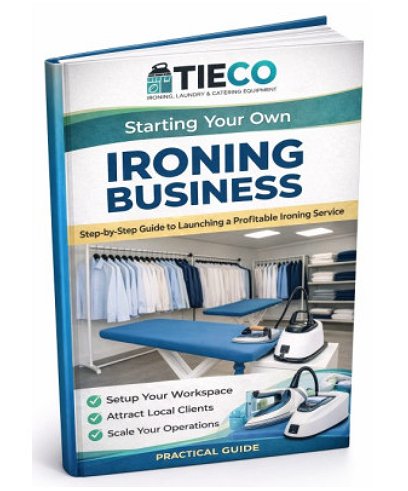
This practical UK-focused PDF goes beyond ironing technique. It explains how to plan, operate and grow an organised service with stronger pricing, workflow and equipment decisions.
£19.99 one-time payment
Structured training can help improve fabric care, finishing consistency, workflow, customer service and pricing knowledge.

Save £65 when using our course link.
If you would prefer support from an existing brand, you can apply to become an ironing agent with All Ironed Out. Available territories and acceptance are subject to local coverage requirements.
Many ironing services begin at home, provided the property has a suitable clean workspace, ventilation, safe power supplies and enough room to separate customer orders. Check your tenancy or mortgage conditions, insurance, local planning requirements and any restrictions that apply to running a business from the property.
You should arrange cover appropriate to the way you operate. This may include public liability, treatment risk or goods-in-trust cover, business equipment, vehicle cover and employers’ liability if you employ staff. Ask an insurer or broker to confirm what is covered rather than assuming a standard home policy is sufficient.
Charging by weight is simple for mixed domestic loads, while per-item pricing can better reflect garments that take longer to finish. Some businesses use weight pricing for standard loads and separate prices for shirts, bedding, delicate items or unusually time-consuming work.
It can make the service more convenient and help attract repeat customers, but travel time and vehicle costs can reduce margins. Use defined collection areas, set days, minimum order values or delivery charges so each route remains commercially worthwhile.
Consider professional equipment when domestic appliances restrict output, recovery time or finish consistency. Buying equipment suited to your realistic daily workload can improve productivity and comfort, but the purchase should be supported by your order volume and pricing.
Start with a clear local offer, an accurate Google Business Profile, a trustworthy website and promotion in relevant community channels. Referral partnerships and introductory offers can help, but dependable collection times, careful garment handling and strong reviews are what usually support repeat business.
Tell us your available space, expected workload and budget. Our team can recommend an ironing system that gives you room to grow without paying for capacity you do not need.
