 FREE UK DELIVERY
01
Gentler on Garments
With no rotating drum, garments are not repeatedly dropped, rubbed or tangled during the drying process.
Dry garments, uniforms, workwear, PPE and specialist items without the tumbling, friction and fabric wear caused by a conventional tumble dryer.
A commercial drying cabinet uses controlled warm airflow to dry items while they hang or sit securely inside the cabinet. For businesses dealing with wet coats, uniforms, waterproof clothing, footwear or delicate garments, it can solve the drying problems that a standard tumble dryer simply cannot.
Conventional tumble dryers are excellent for towels, bedding and suitable everyday laundry, but they are not the right solution for every item.
Repeated tumbling creates friction and mechanical wear. This can shorten the life of uniforms, workwear and specialist clothing.
Waterproof clothing, protective garments, footwear and delicate items may be unsuitable or awkward to process in a conventional dryer.
Hanging wet garments around a laundry room or workplace is slow, untidy and difficult to manage during busy periods.
Schools, sports facilities, emergency services and workplaces often need clothing ready for reuse within a limited turnaround time.
The biggest advantage is simple: you can dry items that are difficult, unsuitable or too valuable to repeatedly tumble dry.
With no rotating drum, garments are not repeatedly dropped, rubbed or tangled during the drying process.
Ideal for coats, overalls, uniforms, waterproof clothing, gloves, footwear and other items that are difficult to tumble dry.
Replace improvised drying racks and garments hanging around the workplace with one enclosed, organised drying space.
Get wet garments and workwear back into service more quickly than relying on uncontrolled natural air drying.
Controlled drying can help businesses care for expensive uniforms, technical garments and specialist workwear.
Heat pump drying cabinets are available for businesses where frequent use and long-term energy consumption are important.
Drying cabinets are particularly useful where a business processes a mixture of conventional laundry and specialist items.
Important: Always follow the garment manufacturer's care instructions and any specific requirements for specialist or protective clothing.
Unlike a tumble dryer, the contents remain stationary inside the cabinet throughout the drying cycle.
Hang or position suitable wet items inside the cabinet.
Choose the appropriate programme or drying settings.
Controlled airflow circulates around the stationary items.
Remove dry garments ready for storage, wear or further processing.
For many commercial laundry rooms, the best answer is not one or the other. The two machines perform different jobs and can work extremely well together.
If the cabinet will be used frequently, energy consumption can become an important part of the buying decision.
Heat pump models are designed to provide a more energy-conscious drying process and can be particularly attractive for higher-volume commercial sites.
The more regularly a cabinet is used, the more important running costs become when comparing models.
Dry wet coats, outdoor clothing, PE kit and suitable footwear.
For suitable workwear, protective garments and operational clothing.
Provide additional drying flexibility alongside conventional laundry equipment.
Dry staff uniforms, outerwear and suitable specialist garments.
Process sportswear, wet kit, outdoor clothing and suitable equipment.
Create an organised drying area for staff workwear, coats and wet-weather clothing.
Before choosing a model, answer these five questions.
Give us an idea of the items, quantity, daily workload and available space. We can help you compare suitable drying cabinets and avoid buying the wrong machine.
Choose by capacity, energy priority and the type of items you need to dry. Smaller sites usually suit 4kg models, while busy laundry rooms, care homes and commercial environments may need 8kg, 10kg, 14kg or larger cabinets.
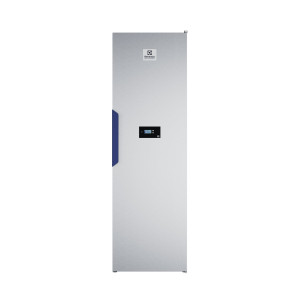
A compact 4kg commercial drying cabinet using warm forced air. Ideal for smaller laundry rooms, schools, nurseries, workplaces and care settings with lighter daily drying needs.
A compact 4kg heat pump drying cabinet for businesses that want lower running costs in a smaller footprint.
An 8kg commercial drying cabinet with controlled airflow, no mechanical tumbling and a typical 42-minute cycle.
An 8kg heat pump drying cabinet designed for energy-efficient garment drying in commercial environments.
A 10kg heat pump cabinet with automatic drying programmes, ergonomic design and lower running-cost potential for busier sites.
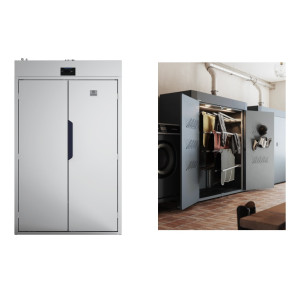
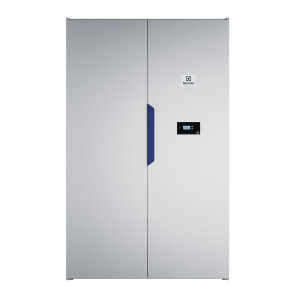
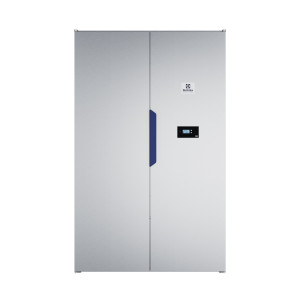
A 14kg high-capacity drying cabinet for busy laundry rooms that need fast, consistent drying without damaging garments.
A commercial drying cabinet is an enclosed machine that dries garments and suitable equipment using controlled airflow while the items remain stationary. Unlike a tumble dryer, there is no rotating drum.
Typical applications include uniforms, workwear, coats, waterproof clothing, sports kit, gloves, suitable footwear, delicate garments and specialist items that may be unsuitable for tumble drying. Always follow the item's care instructions.
It depends on what you need to dry. A tumble dryer is generally better for bulk loads of suitable laundry such as towels and bedding. A drying cabinet is better for hanging garments, specialist clothing and awkward items that benefit from non-mechanical drying.
In some specialist applications it may, but most commercial laundry rooms use a drying cabinet alongside a tumble dryer. This allows bulk laundry and specialist garments to be processed using the most appropriate method.
Heat pump models are designed with energy efficiency in mind and are worth considering where a drying cabinet will be used regularly or where long-term operating costs are an important factor.
The correct capacity depends on the type of items being dried, the quantity per load and how many loads you need to process each day. Our range includes capacities from approximately 4kg to 14kg.

£1,694.88 £1,395.00 inc. VAT

£3,834.00 £3,598.80 inc. VAT

£5,394.00 £5,159.99 inc. VAT

£7,194.00 £6,900.00 inc. VAT
£8,064.00 £6,999.00 inc. VAT
£8,280.00 inc. VAT
£9,001.20 £8,638.80 inc. VAT

£9,268.02 £8,999.99 inc. VAT

£9,691.96 £9,330.00 inc. VAT
£13,558.80 £11,634.00 inc. VAT